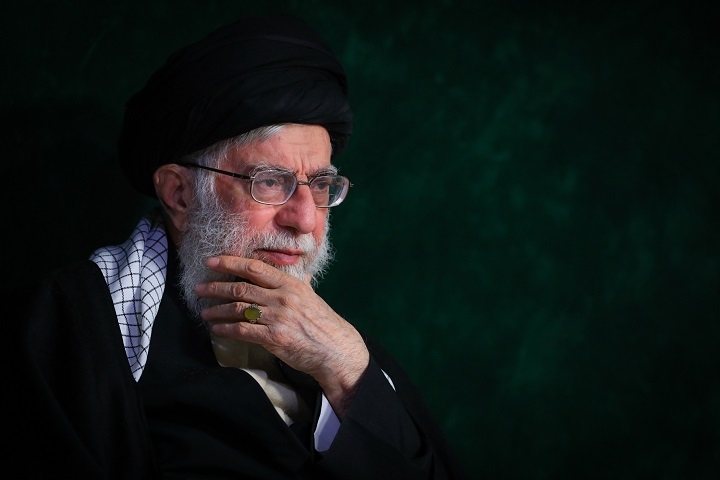
Abi Talib's love and support for Prophet Muhammad as narrated by Imam Khamenei
Abu Talib offered unconditional support for Prophet Muhammad
After the passage of three years or more, in the first phase of be'that, the Holy Prophet (s.w.a.) had managed to convert 30 or 40 people to Islam through his covert call to Islam. Then a divine order was issued - "Therefore declare openly what thou art commanded, and turn away from the polytheists." [The Holy Quran 15: 94] - requiring the Holy Prophet (s.w.a.) to raise the flag of Islam and to openly call people to Islam. The Holy Prophet (s.w.a.) did so and then the events that you have heard about took place. This struck terror into the hearts of the chiefs of Quraysh and the wealthy and powerful people. The first thing that they did was to try to tempt the Holy Prophet (s.w.a.). They went to Abi Talib and told him that if his nephew wanted leadership, they were prepared to grant the Holy Prophet (s.w.a.) absolute authority over their community. "If he wants wealth, we will give him so much wealth that he becomes wealthier than all of us. If he wants to be a king, we will appoint him as our king. Just tell him to stop saying these things." Being concerned about the safety of the Holy Prophet (s.w.a.) and his enemies' plots, Abi Talib went to him and told him the message of the chiefs of Mecca. He probably gave the Holy Prophet (s.w.a.) some advice and recommended that he tone down his remarks to some extent. Maybe he told the Prophet (s.w.a.) that his dogged persistence was unnecessary. "Dear uncle, even if they place the sun in my right hand and the moon in my left to prevent me from achieving this goal, I swear by Allah that I will not do as they say [and I will continue with my call to Islam] until God grants us victory over them or until we all get killed," [Speaking in Arabic] the Holy Prophet (s.w.a.) replied.
Then the Prophet's (s.w.a.) eyes were filled with tears, and he got up to leave. Having observed this faith and steadfastness, Abi Talib was impressed and said: "Dear nephew, go and say whatever you like." [Speaking in Arabic]. He told him to pursue his goal. "I swear by God that I will not give you away, no matter what I receive in return." [Speaking in Arabic]. This steadfastness bred more steadfastness. This steadfastness on the part of the Holy Prophet (s.w.a.) strengthened the roots of steadfastness in the heart of Abi Talib. Pursuing the goals, not fearing the enemy, not being tempted by what the enemy has to offer, and not being dependent on the privileges that the enemy offers to prevent one from treading the path one believes in give rise to resistance, peace, trust in the path, the goal, and God who this goal belongs to. There were not more than 30 or 40 of them. These 30 or 40 people tolerated all those hardships and increased in number on a daily basis. Each day they were witness to what they did to Ammar and Bilal. They were witness to the torturing and martyrdom of Sumayyah and Yasir. They were witness to these things, but they still converted to Islam. That is the way righteousness is promoted. The mere raising of the flag in peace and security will not help promote righteousness. Righteousness will be promoted only when there is steadfastness and perseverance on the part of righteous people who believe in righteousness.
Abu Talib cared for Prophet Muhammad as the love of his life
Umm Ayman—the woman who took care of Prophet after the passing of Aminah-- took him to Medina and left him with Abdul Mutallab- the Prophet’s grandfather. Abdul Muttalib looked after and cared for this child as the sweet love of his life. The elderly grandfather of about 100 years of age—who was the chief of Quraish and very much respected and honored—cherished and loved the child so much so that Muhammad would never suffer from lack of affection—and he never did.
The astonishing fact is that this child endured hardships due to the loss of his parents so that his aptitude and preparedness would increase. When he was eight, Abdul Muttalib passed away, too. It has been narrated that just before his death, Abdul Muttalib entrusted the child to his honorable and virtuous son, Abi Talib.
Abdul Muttalib asked Abi Talib to make a pledge to his father to look after and support Muhammad as much as he, himself, cared for and supported him. Abu Talib agreed and took the child to his home and cared for him as the love of his life. For about forty years, Abu Talib and his wife-- who was the lioness of Arabs, Fatimah Bint Assad, the mother of Imam Ali (a.s.)-- supported and assisted this lofty human [Muhammad] as if they were his own parents.
Since he was a child, he opted for serving as the shepherd for the sheep of Abu Talib. These are factors in developing his personality. As a child, he also chose to go on trips for commerce with Abu Talib. His commercial travels were repeated as he grew into a young man, met and married lady Khadijah (a.s.), and later he reached the age of forty when he became a prophet.